
Uncategorized
MDMA Crystal in Toronto: Youth Culture, Illegality, and the Push for Harm Reduction
MDMA crystal in Toronto, Canada’s largest and most diverse city, is a cultural hub where trends—both good and bad—tend to flourish quickly. Among these, the use of MDMA crystal in Toronto has carved out a visible space in nightlife, student life, and electronic music culture. While the euphoric drug is often associated with party scenes and festivals, its growing popularity in Toronto brings up important conversations about legal enforcement, drug safety, and public health policy.
-
ETH-LAD-PULVER
Le prix initial était : $4,900.00.$150.00Le prix actuel est : $150.00. -
F-PV9
Le prix initial était : $9,200.00.$250.00Le prix actuel est : $250.00. -

Fentanyl en Poudre Disponible au Quebec
Plage de prix : $500.00 à $5,000.00 -

Fentanyl Powder
$1,000.00 -
FUB-AKB48
Le prix initial était : $2,000.00.$270.00Le prix actuel est : $270.00. -
FUB-AMB
Le prix initial était : $6,500.00.$245.00Le prix actuel est : $245.00. -
FUB-PB 22
Le prix initial était : $3,100.00.$260.00Le prix actuel est : $260.00. -
Gélules Nembutal
Le prix initial était : $2,800.00.$200.00Le prix actuel est : $200.00. -
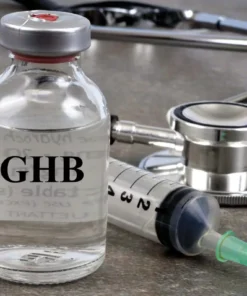
GHB (Gamma Hydroxybutyrate)
Plage de prix : $500.00 à $900.00
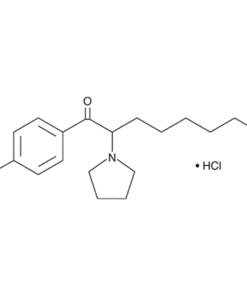
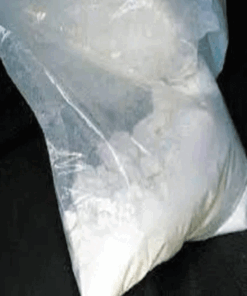
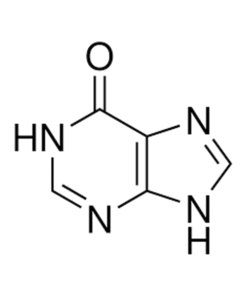

What Is MDMA crystal in Toronto?
MDMA (3,4-methylenedioxymethamphetamine) is a synthetic psychoactive substance known for producing feelings of empathy, emotional openness, and sensory enhancement. While the term “ecstasy” is often used interchangeably, MDMA crystal in Toronto typically refers to purified, crystalline MDMA, often considered to be a stronger and « cleaner » form than tablets or pills.
However, without regulated production, even MDMA crystal can be cut or laced with other harmful substances like methamphetamine, bath salts, or fentanyl, especially in unregulated urban drug markets.
Legal Status in Toronto and Canada
Under the Controlled Drugs and Substances Act (CDSA), MDMA is listed as a Schedule I drug, the same category as heroin and cocaine. This makes possession, distribution, production, and importation illegal across Canada, including in Toronto. Penalties can include prison time, heavy fines, and a permanent criminal record.
Toronto Police Services, in coordination with Health Canada and federal agencies like the Royal Canadian Mounted Police (RCMP), actively target trafficking networks that distribute synthetic drugs, especially those that penetrate the festival, club, and university party circuits.
Despite law enforcement efforts, however, demand for MDMA remains strong—especially among university students, young professionals, and nightlife enthusiasts.
Toronto’s Youth and Festival Culture
Toronto boasts a thriving entertainment scene that includes massive festivals like:
- VELD Music Festival
- Electric Island
- Dream in High Park
- Countless EDM and underground events in venues across Queen West, King Street, and College Street.
These events are central to Toronto’s youth identity, and MDMA is often used to amplify the experience, making users feel more connected to music and people around them. Many young users perceive MDMA as “safe” or “less harmful” than other drugs, often citing its emotional and social effects.
However, this perception does not account for risks such as:
- Overheating or dehydration
- Serotonin syndrome
- Contaminated substances
- Mental health complications after repeated use
Trafficking and the Drug Market
Toronto’s size and international connections make it a key node in Canada’s illicit synthetic drug trade. MDMA is frequently smuggled in from Europe (especially the Netherlands), or manufactured in illegal Canadian labs. It often circulates through dark web markets, social media platforms, and encrypted messaging apps.
Recent busts in the Greater Toronto Area have uncovered thousands of doses of MDMA crystal, often alongside LSD, ketamine, and cocaine. These substances are commonly sold together in party circuits, increasing the risk of poly-drug use and unpredictable effects.
Harm Reduction Efforts: A Slow but Growing Movement
While Toronto has not yet embraced drug decriminalization like British Columbia, it has a growing network of harm reduction advocates working to reduce the dangers associated with drug use. Key organizations include:
- TRIP! Project – Peer-based outreach focused on safer party use and drug education.
- Toronto Public Health – Provides general drug information, mental health referrals, and overdose prevention.
- DanceSafe Canada – Occasionally partners with festivals for on-site testing and education.
Some underground parties and rave organizers offer anonymous drug checking kits, allowing users to test the purity of substances. However, legal restrictions prevent wide-scale implementation of testing services at most public events.
A Public Health Opportunity
With rising rates of mental health concerns, overdoses, and drug-related hospitalizations, some experts in Toronto are calling for a shift from criminal enforcement to public health-centered approaches. This includes:
- Expanding safe consumption education
- Implementing on-site drug testing at major events
- Opening up conversations around decriminalization of personal possession
- Increasing funding for mental health services, especially for youth
As Toronto’s youth continue to explore altered states through substances like MDMA, policymakers and health organizations must choose between outdated punitive models and modern, evidence-based harm reduction strategies.
Conclusion
MDMA crystal in Toronto use in Toronto is not a passing trend—it reflects deeper patterns in how young people connect, cope, and seek out intense experiences in a high-pressure society. As the city navigates this reality, a balanced approach that includes education, health support, and legal reform will be key to reducing harm while respecting the social realities of today’s youth.
